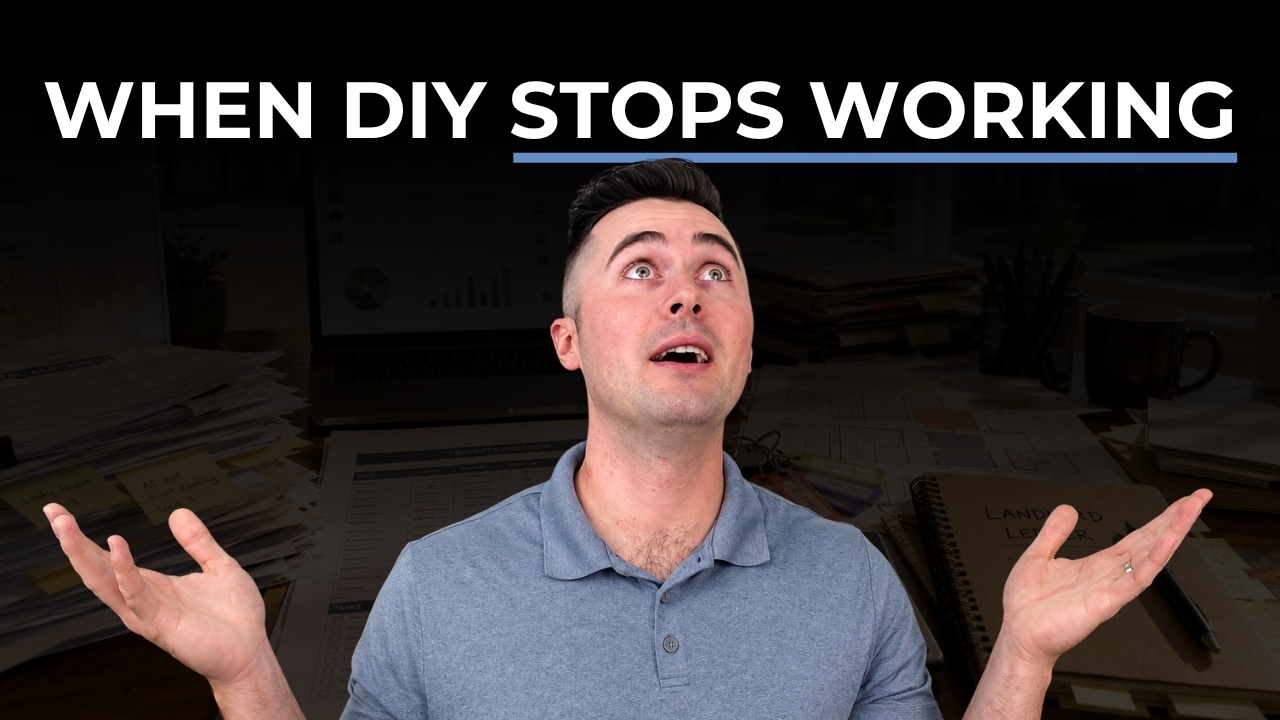
Most landlords can handle one rental on their own. Somewhere around three to five, the workload stops adding up and starts compounding. Here's what actually changes.
There's a pattern that shows up again and again in property management. One rental is almost always manageable on your own, and it's somewhere around the third, fourth, or fifth property that things quietly change. The reason usually surprises people, because it isn't that the properties got harder or the tenants got worse, it's that the way you've been managing stops scaling.
Understanding what actually shifts in that stretch explains why so many landlords eventually start looking for support, often later than they should have.
A single property lets you stay reactive. With one rental, you can take things as they come and be perfectly fine, because the repair, the tenant email, and the occasional vacancy each get your attention in the moment. There's room to handle it that way even without much organization behind it, since in practice, you are the system. That holds up well at one property, which is exactly why owning a first rental rarely feels like much of a burden.
Between three and five, the cracks start to show. Add a few more properties and the work doesn't simply add up; it compounds. The issue isn't just a higher count of tenants or repair requests; it's that everything starts happening at once and pulling in different directions. Two repairs land the same week. Lease renewals stack on top of each other instead of spacing out. Vacancies hit at the same time rather than staggered, and keeping vendors coordinated turns into its own job.
Effort stops being the thing that solves it, and structure becomes the thing that's missing, which is when a portfolio can start to feel scattered. It's also where some of the most expensive landlord mistakes tend to happen.
“It's not about effort anymore. It’s about the structure.”
Self-managing rarely ends with a decision; it ends with a drift. This is usually where the turn happens, and it's almost never a single dramatic moment. Owners don't typically decide overnight that they're finished. What they notice instead is subtler: replies take a little longer, minor problems linger, it gets harder to remember who said what, and tasks that once felt routine start carrying a low hum of stress. No one thing breaks. It's simply what happens when the scale outgrows the systems holding it up, and because it builds slowly, most people don't see it until they're already in it.
The tipping point tends to look the same for everyone. It's rarely one disaster that sends a landlord looking for help. More often, it's the realization that the portfolio is occupying more headspace than they ever planned to give it. That's the moment owners tend to look into professional management, not because they've failed at managing on their own, but because managing by hand has simply stopped being worth the time.
The thinking moves from "I can handle this myself" to "I want this running smoothly without me touching every decision." We see that shift constantly, and it's almost never about giving up control. It's about getting structure, because once a system runs the day-to-day, owning rentals becomes far more predictable and far less reactive.
If you ever have questions about the process, or about how managing rentals should or shouldn't work as your portfolio grows, don't hesitate to reach out. We're always happy to be a resource. Call or text us at 843-212-4065, email us at info@tidepm.com, or visit charlestonspropertymanagement.com. We look forward to hearing from you.