
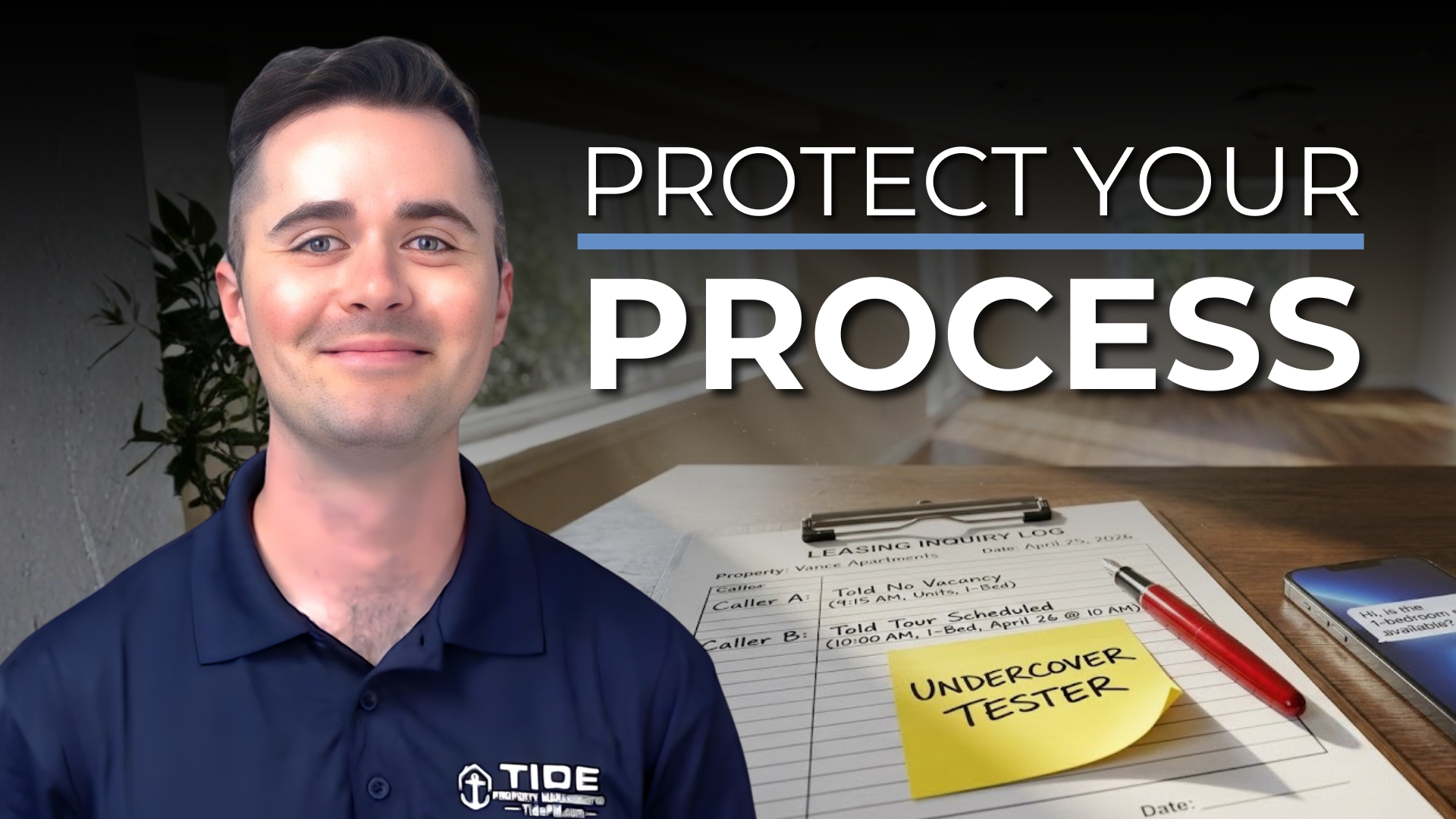
Fair housing testers are trained to spot differences in how people are treated. Here's how to make sure your leasing process holds up under scrutiny.
What if the person asking about your rental property isn't actually a real tenant at all? They could be a fair housing tester, someone legally trained to uncover discrimination by seeing how different people are treated during the housing process. And the differences they're looking for might be smaller than you think.
It can start with everyday decisions. We worked with a landlord who thought they were handling inquiries like normal, responding to messages and choosing who seemed like the best fit. But two applicants with nearly identical financial circumstances were treated differently, and one was a member of a protected class. That small difference triggered a fair housing investigation, turning everyday decisions into documented evidence.
Here are four areas fair housing testers focus on, and how to protect yourself.
1. Inconsistent information. One of the biggest things testers look for is whether different people are told different things. One caller hears there's no availability while another hears there is. One gets better, and the other doesn't.
To protect yourself, you need one clear, consistent source for pricing, availability, and next steps. Consistency is what protects you.
2. Tone, encouragement, and access. Fair housing issues aren't always about what's said. They can also be about how it's said. Testers notice whether one prospect is encouraged to apply while another is subtly discouraged. They notice whether everyone gets the same access to tours, callbacks, and information. They notice whether staff sound helpful to one person and dismissive to another.
The DOJ has noted that the vast majority of its testing cases involve differences in availability or terms, and those differences often surface through side-by-side comparisons.
“Fair housing testers are looking for differences. Consistency is what protects you.”
3. Screening and disability requests. Testers and investigators also look at how you handle screening criteria and accommodation requests. Are your standards written down? Are they applied the same way every time, or does the answer change depending on who's asking?
Disability-related requests are another major area. When someone asks for a reasonable accommodation or modification, you need to know exactly how to respond, what steps to follow, and how to document the request properly.
4. Marketing. Fair housing testing also applies to your ads. Your marketing should use neutral language, equal access practices, and documented ad settings. Fair housing readiness isn't just about how your leasing agent answers the phone. It's about your entire leasing process, from the ad someone sees to the follow-up they receive.
Fair housing testers are looking for differences. Different answers, different treatment, different access, different follow-up. If your responses are consistent, documented, and trained, you put yourself in a much stronger position.
If you want help reviewing your leasing process, your responses, or making sure your systems are ready before a problem shows up, we're here. Watch our video above for the full breakdown.
Call us at 843-212-4065, email info@tidepm.com, or visit tidepm.com. We look forward to hearing from you.