
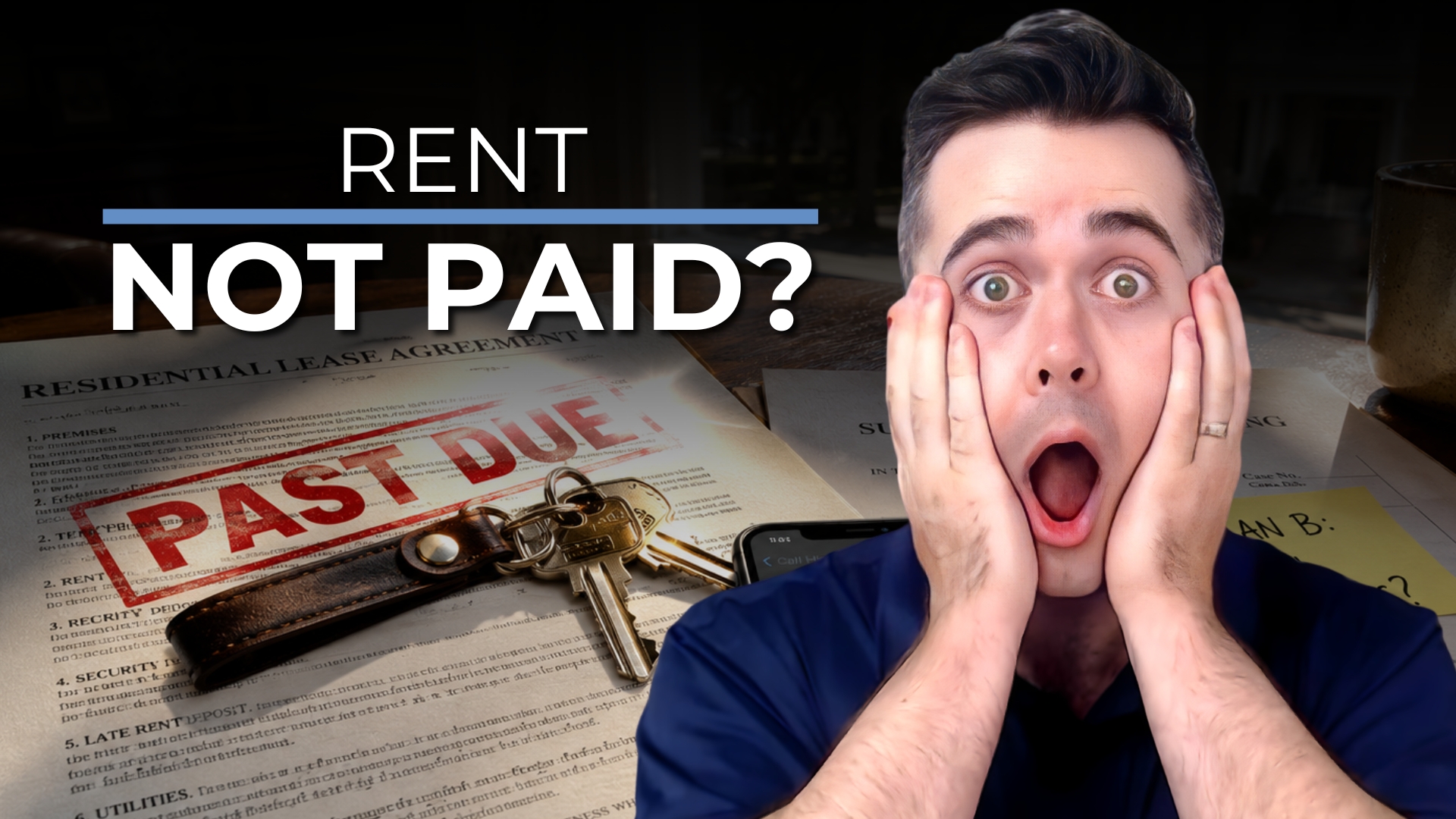
Most landlords either freeze or overreact. Here's a clear process that keeps you on the right side of the law and gets the situation resolved.
The rent was due days ago, and your tenant hasn't paid. If you've been a landlord long enough, you know this moment is coming at some point. The question isn't whether it will happen. The question is whether you're ready to handle it the right way when it does.
Most property owners fall into one of two camps when rent goes unpaid. Some wait it out, hoping the tenant will come through on their own. Others react too quickly and end up doing something that creates a much bigger problem than a missed payment. Both approaches can cost you, and not just financially.
Before we go any further, we’re not attorneys, and none of this is legal advice. These are best practices from our experience managing properties in Charleston. Always talk to a legal professional about your specific situation.
Go back to the lease before you do anything else. Your lease agreement is the foundation for every next step. Look at the due date, the grace period, and the late fee structure. Every lease is different, and every state handles these details differently, so you want to make sure rent is actually past due before you start taking action.
Once you've confirmed it, pick up the phone. A quick call or text to your tenant can go a long way. Maybe their paycheck hit a day late. Maybe there was a banking issue. If they're responsive and willing to work something out, a short-term payment arrangement might solve the whole thing without anyone involving a courthouse.
The important part here is that every interaction goes on the record. Texts, emails, phone call summaries, and agreements you reach together. Write it all down and save it. If this does end up in court, that paper trail is your best friend.
“The legal eviction process exists for a reason, and skipping it always backfires.”
If your tenant goes quiet, it's time to move forward. When the calls go unanswered, and the rent is still sitting unpaid, waiting longer won't change the outcome. This is when the formal eviction process begins.
The steps are fairly standard, but the timelines and filing requirements depend on where you are. Your local magistrate court can walk you through exactly what needs to happen and in what order. Getting even one step wrong can reset the clock entirely or get your case dismissed, so take the time to get it right or bring in someone who knows the process inside and out.
There's also an option many property owners overlook: a cash-for-keys arrangement. You're essentially paying the tenant to move out on their own. It feels counterintuitive, but run the numbers. If you can have the unit back, cleaned, and re-rented within a few weeks instead of spending months tied up in court proceedings, you often come out ahead. It's not the right call every time, but it's worth having in your back pocket.
There’s one line you cannot cross. When a tenant isn't paying or communicating, frustration builds fast. But no matter how bad it gets, you cannot take matters into your own hands. Changing the locks, cutting off the water or electricity, hauling their furniture to the curb, any of that falls under what's called self-help eviction, and every state in the country treats it as illegal.
The fines, penalties, and potential lawsuits that come from it will cost you far more than whatever rent you're owed. The legal process exists specifically to protect property owners who follow it. It's slower than anyone wants it to be, but it works. Serve the proper notice, file with the court if the tenant doesn't respond, and let it play out the way it's supposed to.
If you're in the middle of this right now or you want to be prepared before it happens, we're here to walk you through it. Ask us about our eviction releasing guarantee and how it protects you as a property owner. Call us at 843-212-4065, email info@tidepm.com, or visit charlestonspropertymanagement.com.